Skip to content

Posts tagged ‘Whiteness’

On Growing up Mexican Italian American

[This piece was originally published in January 2018 by The Parent Voice, an online journal that no longer exists. The layout and some of the photos in this version are different.]

I became aware of the world around me during the Reagan era in a middle-class, conservative, predominantly white suburb of Los Angeles. Growing up Mexican Italian American in this context was difficult and dissonant for me. If I had grown up in a different place or class, my mixed experience might have been very different, but then I would not have this story to tell.
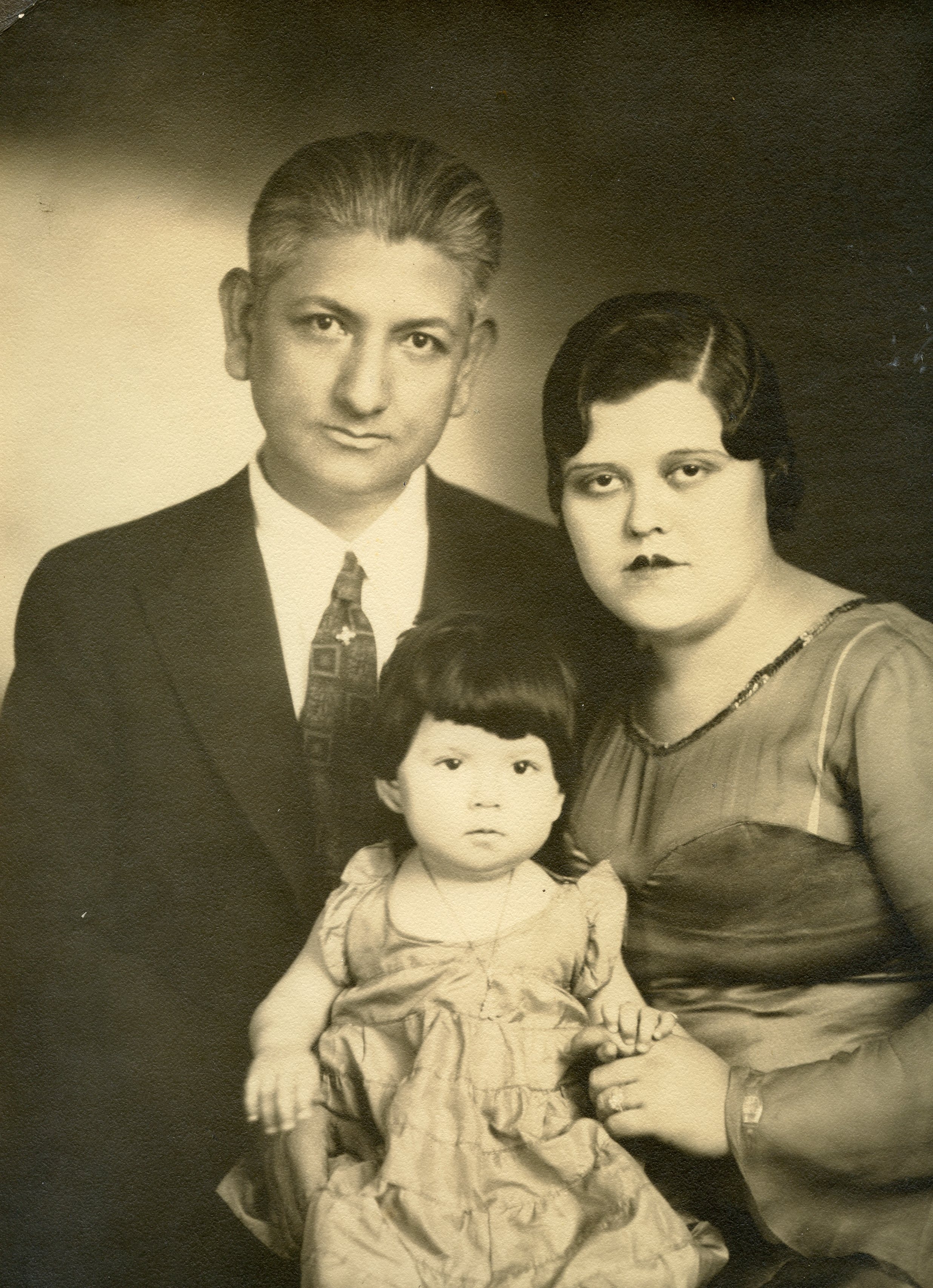
Phillipe, Elvira & Tia Dora

My mother is the youngest daughter of immigrants from Mexico, the first in the Chavez-Rios family to graduate from high school. Her father Philippe Rios crossed the border as a boy with his family in the late 19th century. They settled in South El Paso, Texas. Phillipe migrated to Los Angeles as a young man and worked his way up in the steam laundry industry. Years later, he married Elvira Chavez whose path to America was far easier than his was. In the 1920s, she simply boarded a train from Parral, Chihuahua to Los Angeles Union Station and moved in with a relative.

My father Gino, the son of Clinio Pellegrini and Edda Dal Bianco, was born during WWII in Lugo di Vicenza, Veneto. At seventeen, he immigrated to America to work and to pursue a career in the arts. He studied at various arts colleges in Los Angeles. He then attempted to obtain US citizenship by being legally adopted by his hosts, the Markham family. This attempt was unsuccessful, but he continued to use their name, feeling that Italian immigrants were still targets for discrimination and that he could secure more work in Hollywood with an Anglo-Saxon last name.      

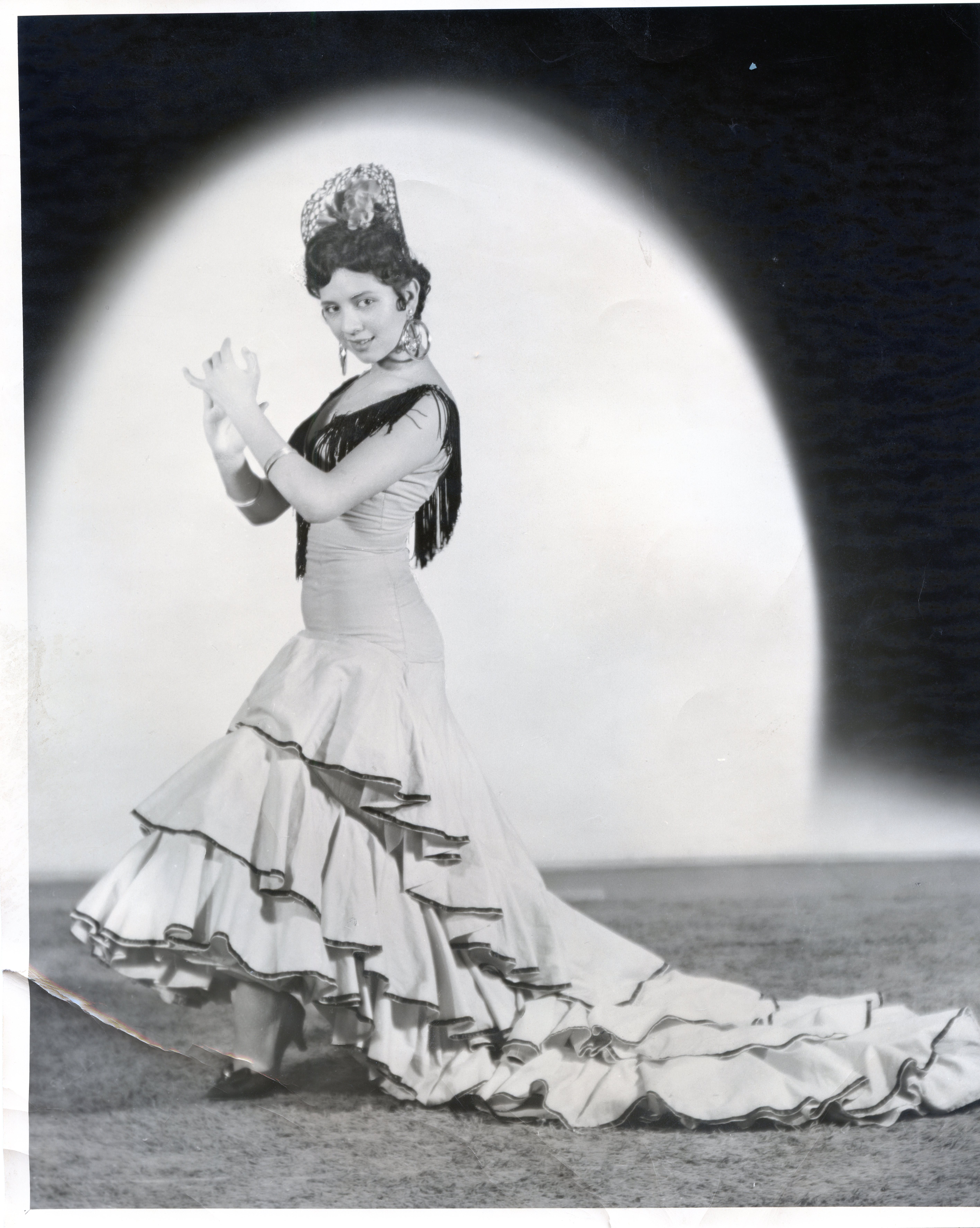
My mother was engaged in a dance career and working full-time when my father came into her life. He was working in crews that prepared sets and painted backdrops for television shows like H.R. Pufnstuf and for movies like 2001: A Space Odyssey. When they married in 1968, both appeared to be in pursuit of the American Dream. He was making good money. He would become a US citizen, move forward in Hollywood, and be credited for the work that he did. They bought a house in the suburbs, one with a family den and a detached two-car garage in which he could do his art.
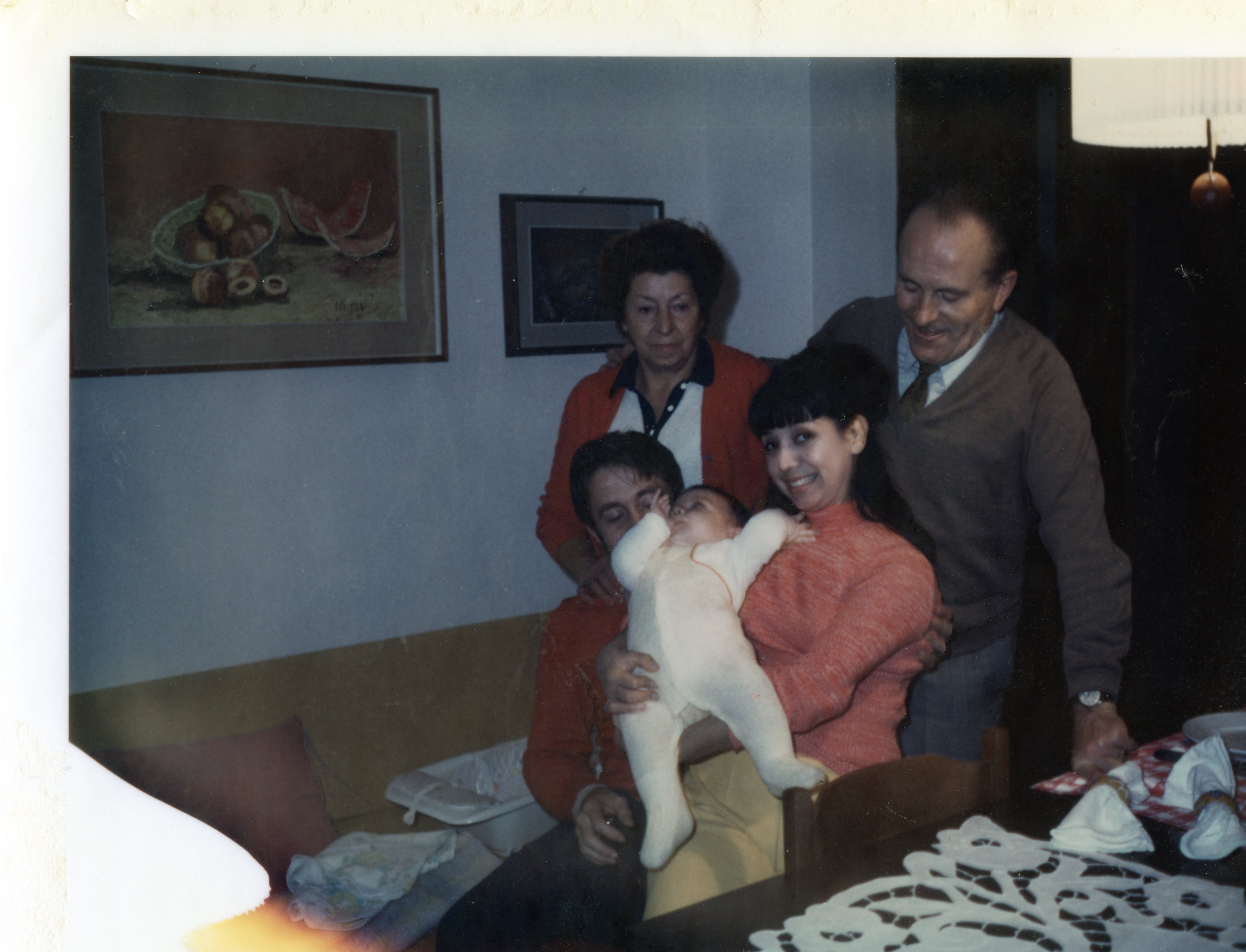
My father, however, grew tired of his life in Los Angeles and of the idea of working for Hollywood capitalists that would continue to dictate the form and content of his art. So, my parents rented the house and moved to Italy so that he could create artworks that were more socially conscious and committed. Unfortunately, art projects that paid well were few and far between, and the lack of money increased family tensions. The family fell apart in 1972 when I was one.  My mother returned to Los Angeles with me. I am the product of this failed international, multiethnic marriage.

Back in Los Angeles, we lived in various apartments in the Mid-Wilshire district because the city was where my mother could find full-time work. I was happy living in the city. However, when it was time for me to start kindergarten, my mother decided to move back to the house in the suburbs for presumed better schools in a safer, cleaner, whiter neighborhood.

My best friend in kindergarten came from a somewhat similar mixed background as I. His mother was an immigrant from Argentina, and his father came from Sicily. We played on a few soccer teams together, and remained friends through the fourth grade. I liked to go over their house for playdates and holiday get-togethers. They had MTV, Atari, and a large backyard. The biggest problem with this friendship, from my perspective, was his older brother (three years older) who was totally into Duran Duran, and, for a short while, Mein Kampf. In my eyes, he was about a foot taller than me with thick, wavy, sandy-brown hair, a light complexion, and a bad case of acne. He wanted to be on team white, and he did not like to be reminded that he was part Hispanic and the son of a dark-skinned southern Italian. Spic and beaner were words that he casually used, and when he became annoyed by my presence and appearance, he did not hesitate to call me an ugly and stupid beaner too.

Growing up, I sometimes needed to explain to curious classmates and adults why my physical appearance did not match up with my Anglo-Saxon last name. Questions that they asked included: Do you have a stepdad? Were you adopted? Where are your parents from? If asked respectfully, I was happy to explain that my father was an artist and lived in Italy and that my mother’s parents came from Mexico, but my honest explanation typically generated expressions of miscomprehension, doubt, and an occasional that’s cool. In this time and place, the custom or norm was to [identify] others and oneself in monoracial, monoethnic or national terms. Hence, for want of others in this context willing to model or validate mixed and multiracial identities, the notion that I could publicly claim a mixed identity remained cloudy in my adolescent mind. I tended to vacillate in silence between the established monoracial, monoethnic, and national terms that were applicable to me.

As a kid, I yearned to spend more time with my Mexican and Italian relatives, however the money needed to travel was almost always lacking. Unlike some international, multiethnic Third Culture Kids (TCK) with professional-class parents, I was a latchkey kid with an absent Italian father and a mother who often needed to work two jobs to pay the mortgage and utilities. My Mexican grandparents unfortunately had passed away before I was born. Relatives from Mexico visited us every now or then, or we would meet them in between. Besides these few encounters, my knowledge of my Mexican family came from family photo albums, artifacts, and stories told by mother about her parents, aunts, and uncles. Regarding my Italian family, my father did not have much money, and he did little to help me stay connected. Worse, when I was in the third grade, he stopped writing letters, calling, and sending postcards altogether. Fortunately, my Italian grandparents called and wrote to me regularly, and I stayed in touch by phone with my uncle, aunt, and cousins. More significantly, my grandmother travelled to Los Angeles a few times to spend time with me. Her love and consistent communication with me via phone, letters, and photos helped me sustain a sense of also being Italian.

In middle school, I played on the basketball team, but I was also friends, not with the punk rockers, mod revivalists, heavy metal kids, Madonna wannabes, born-again Christians, or student leadership kids, but with the break-dancing crew. I sucked at break dancing, but I was good at carrying a boom box and at cheering on my friends who were good break dancers. The kids in this group, like my other few close friends after the third grade, were my complexion or darker. I liked being friends with these kids, especially when we would ride our bikes far away to parks and schools in neighborhoods far more diverse than ours to challenge other break dancers, play hoops, or to just hang out. 

In high school, I gradually withdrew socially as I became more aware and resentful of the ramifications of growing up poor with an absent father within the conservative, white, middle-class suburbs of Los Angeles. In my freshmen year, I accepted the view that the burly, Germanic-looking white men in positions of authority—coaches and administrators—were models of good American citizenship. However, I became fed up with their careless, condescending, or chauvinistic comportment toward minorities. Most of these white men became objects of my derision in my final two years of high school. I swore to myself that I would never become like them. Unhappy and angry about my situation, I continued to play basketball and run distance, but I was absent from school more and more. I did not want to be there that last year; I barely passed my required classes. Skipping my high school graduation ceremony was my final act of social withdrawal.
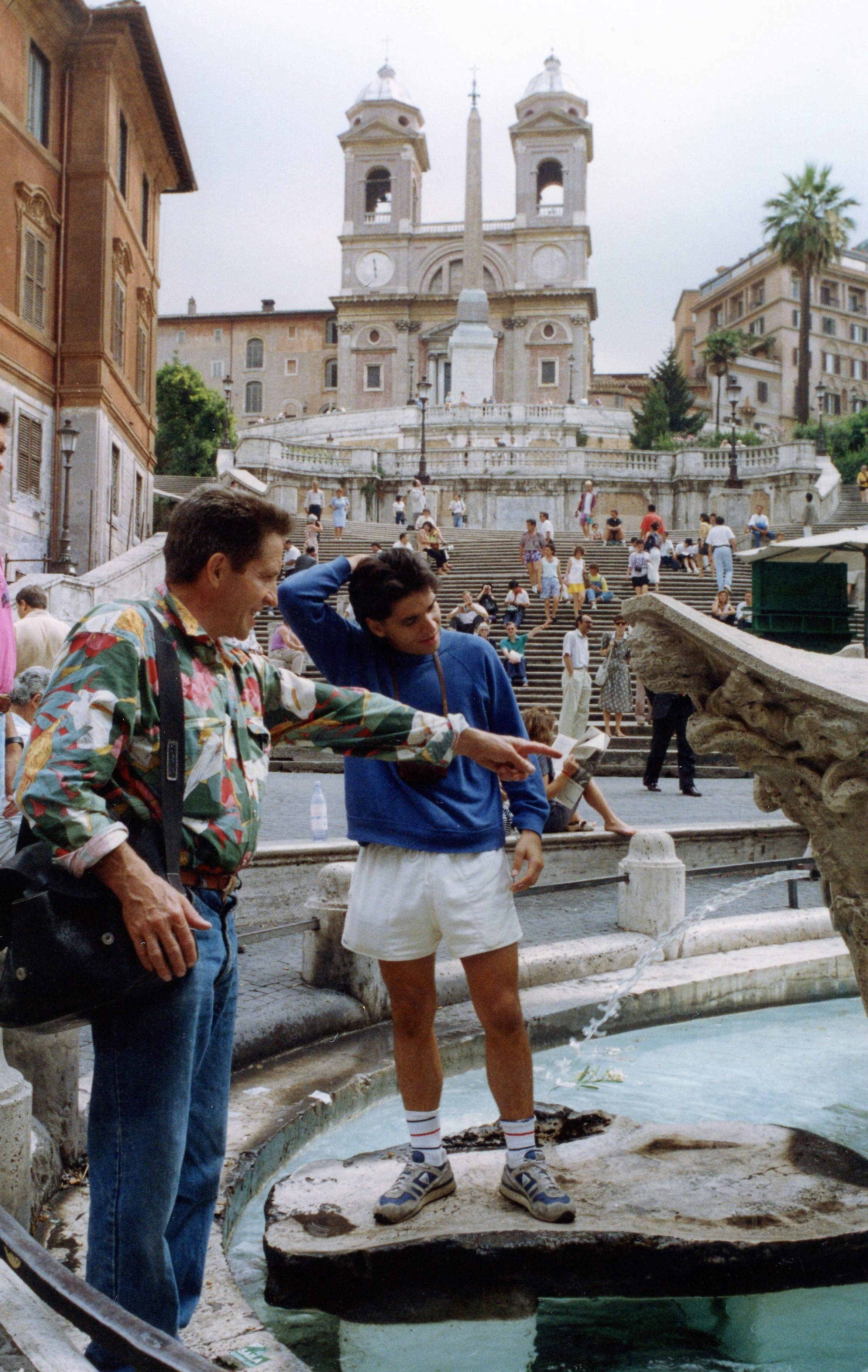
Fortunately, my desire to investigate and reclaim my entire heritage also grew exponentially during my final two years of high school. I was hungry for culture, and I was determined to embark on a personal journey of cultural reclamation by first tracking down my father and spending time with him and my other Italian relatives. Of course, I had to work as a temp for about six months after high school to earn the money that was needed to travel to Italy. The time I spent with my family and my father in Italy showed me that it was possible to develop an international, multiethnic sense of self.  Back in Los Angeles, I started college with this possibility in mind, expunging my old Anglo-Saxon last name from all official records, and starting down the path of forging a public mixed identity.  

Ivan Dall-Igna, mio cugino

Much has changed in the world since I was an ambivalent and angry mixed kid growing up in the conservative white suburbs of Los Angeles during the Regan years. For one, these suburbs are now predominantly Asian. Today I am totally at peace with the circumstances of my upbringing and my difficult mixed experiences growing up. I might not be in the good place that I am today without them. More importantly, they gave me purpose and motivation to create a mixed identity that has also been a means for me to engage and to have a public voice on issues such as monoracialism, white normativity, colorism, institutional racism, and other effects of the history of white supremacy. Moreover, I am now a professional-class parent with my own very mixed child who also has an Israeli grandmother and cousins. I feel privileged to be in a position to support her as she navigates through her own identity challenges in this age of Trump. My hope for the future is that as more people cross established lines of race, ethnicity, and nation to form unions with their loved ones, more communities, institutions, and nations will choose to validate and support the lived realities and identities of emergent multiethnic/multiracial families and individuals.

Complicating Race or Reproducing Whiteness? Heidi Durrow and The Girl Who Fell From the Sky

[This is an excerpt from a paper (currently being revised) that I presented last month at the 2014 MELUS Conference in Oklahoma City.]

[…] Heidi Durrow is also the latest member of the mixed-experience generation to achieve widespread recognition following the publication of her deeply autobiographical first novel. The Girl Who Fell From the Sky was published in 2010 after winning the 2008 PEN/Bellwether Prize for a first novel that addresses social justice issues. It became a national bestseller in 2011, and is now available in French, Dutch, Danish, and Portuguese. This is a remarkable accomplishment for a book that was repeatedly rejected by the traditional publishing industry.

For those who are unfamiliar, The Girl Who Fell From the Sky recounts the racialization, alienation, coming of age, and coming to multiracial consciousness of Durrow’s fictional intermediary, Rachel Morse. Rachel is the sole survivor of a heartbreaking tragedy: her Danish mother Nella jumps from a rooftop in Chicago with all her biracial children. After recovering, Rachel is sent to live with her paternal grandmother who lives in a predominantly black neighborhood in Portland, Oregon. Her alcoholic father, an airman stationed overseas, has disappeared from her life. The year is 1982. Rachel is seen as a light-skinned black girl by her new family and by the surrounding community. From the 5th grade onward, she identifies herself as black, but is still ridiculed for talking white; she is both resented and desired for her good hair and blue eyes. In short, Durrow’s novel recounts from multiple perspectives how Rachel comes to understand the tragedy that claimed her mother and siblings, and in the process reclaim her Danish cultural memory, becoming Afro-Viking like Durrow.

Some commentators are troubled by Rachel’s evolution from light-skinned black girl to Afro-Viking and by the great deal of uncritical attention that Durrow has received from the mainstream media. They say that Durrow’s work implements and promotes the politics of the American Multiracial Movement. In other words, they see her as a multiracial activist who also happens to write fiction. Or, as Summer McDonald puts it in her article “Canon Fodder: ‘The Girl Who Fell From the Sky’ and the Problem of Mixed-Race Identity,” Durrow’s novel “is a fictional rendering of her real life politics.” In particular, McDonald and other commentators such as Rainier Spencer, Jared Sexton, and Steven F. Riley disagree with a central message conveyed by multiracial advocates and apparently by Durrow—namely, that asserting a mixed-race identity is a socially just and progressive act. In McDonald’s words, “mixed- or multi-racial identity in a United States context is hardly about racial harmony or progress, but instead reinforces racial hierarchies by relying upon the equality efforts spearheaded by blacks while reinforcing anxiety about (being affiliated with) blackness.” Put differently, mixed-race identity, and Durrow’s in particular, “…reiterates white supremacy by attempting to etch a space for itself somewhere under whiteness—which it knows it can never access—and definitely above blackness.” Riley, who was a frequent contributor to Mixed Chicks Chat, agrees with McDonald; he adds that Durrow’s work reflects “her desire to be identified as ‘not black’” (“Canon” Responses).

Excuse the pun and my use of a template from Gerald Graff and Cathy Birkenstein’s book They Say/I Say: The Moves That Matter in Academic Writing, but I have mixed feelings about Durrow’s work, which includes her novel, her festivals, her blog, podcasts, as well as her interviews in print and on YouTube. On the one hand, I think it is fair and useful for commentators to ask how Durrow’s work relates to white privilege and to the history of white supremacy. On the other hand, I think that Durrow’s novel (and other work) defies the limits of black/white America and ruptures the tradition of black/white passing narratives.

That said, many of the criticisms that commentators levy against multiracial advocates and mixed-race identity are spot on. Simply asserting a mixed-race identity in light of the popular formula “I’m not black, I’m not white; I’m both or mixed” is far from progressive or revolutionary. I concur with David Theo Goldberg’s point in “Made in the USA: Racial Mixing ‘N Matching” that “…the challenge to the project of racial purity in the celebration of mixed-race identities is at best ambiguous, (re)fixing the premises of the racializing project in place as it challenges that project’s very terms of articulation” (Racial Subjects 61). Put differently, popular versions of mixed-race identity generally work to reproduce race, rather than challenge and complicate it, insofar as most people who assert and/or celebrate mixed-race identities assume that races are real and that ethnic and racial group identities, histories, and cultures are stable and durable.

I also agree with the point that the mainstream media extends “the racializing project” when it presents interracial families, mixed-race children, and generation mixed as evidence of racial progress, multicultural harmony, and/or of an impending post-racial America. As Jared Sexton (Amalgamation Schemes) and others have shown, the recent celebration of multiracials in the mainstream media assumes and privileges heterosexual unions between members of different races or ethnicities. The mixed children of these unions then are assumed to embody, balance, and/or bridge the cultures of their presumed mono-racial or mono-ethnic parents. This presumption about the transformative capacity of mixed-race children privileges heteronormativity, and also promotes the myth, which is not at all new to our era or country, that interracial marriage and procreation are progressive acts that help societies evolve beyond race and racism.

It is also the case that powerful political and corporate entities can easily co-opt and redeploy multiracials in ways that both sustain conventional racial taxonomies and divert public attention away from blackness, white privilege, and the work of anti-racist scholars and activists. In other words, multiracials can be (and have been) used by powerful entities, often in conjunction with the mainstream media, to reinforce and propagate the popular sentiment that America is moving beyond the race problem and by extension beyond the need to educate the public about blackness and the history of white supremacy.

The above-mentioned criticisms of multiracials certainly cast doubt on the goals that Durrow sets for her work, and specifically on her oft-repeated statement that her work aims to complicate race and dismantle racism. Put differently, her belief in the transformative potential of individuals like her asserting mixed-race identities and telling their complex mixed-roots stories might seem unfounded, confused, or even disingenuous after taking into consideration past uses and abuses of mixed race. At best, then, these stories might help to educate the public about racism, blackness, white supremacy, and other social justice issues. At worst, rather than helping to heal racial divisions within the individual and American society as Durrow hopes, these stories reinscribe and exacerbate them; rather than complicating race and dismantling racism, these stories work in the service of power to divert public attention away from blackness and white privilege. At any rate, these are the main conclusions that McDonald, Riley, and others have reached about Durrow’s work.

On the other hand, I wonder whether it is fair and accurate to cast Durrow as a spokesperson for American multiracial identity politics, and to claim that her Afro-Viking identity is a facsimile of mainstream media and advocacy versions of mixed-race identity. Do the creative goals of her work mirror the political goals of Susan Graham and other multiracial advocates? Does her conception of Afro-Viking identity match the conception of mixed-race identity that journalist Susan Saulny foregrounds in her Race Remixed series in the New York Times? Is Durrow clinging to the notion that races and racial identities are real, stable, and durable? How wedded is she to her Afro-Viking identity?

Let’s delve deeper.

When it comes to asserting her Afro-Viking identity in public, Durrow has been consistently playful and mercurial. She usually qualifies her commentary about her Afro-Viking identity with the assertions that she is also a story, and that she is constantly learning and changing. In other words, she stipulates that her identity changes from day to day. Some days she likes to call herself African American and Danish; other days Afro-Viking, a story, or just Heidi. She sometimes also says that she is not trying to be glib about her identity, and then makes the caveat that to her knowledge there are only twelve other Afro-Vikings in existence. Altogether, these comments imply that Afro-Viking is one facet of a larger personal identity that is compound and shifting.

Her comments about her Afro-Viking identity also imply that, unlike many multiracial activists and journalists, she does not buy into the notion that races and racial identities are real, stable, and durable. Though she uses racial and ethnic categories in asserting her Afro-Viking identity and personal narrative, her use of the categories is creative, witty, and particular to her, and, if we take her word for it, twelve other individuals. Hence, her conception and deployment of mixed-race identity would not provide useful support for a politics of identity on behalf of the purported new multiracial group. Indeed, her Afro-Viking identity with its emphasis on variability, creativity, and individuality defies conventional racial and ethnic group identity politics that obligate individual members to show pride in and conform to the cultural histories, beliefs, and mores of their particular groups. That is to say, when Durrow states that she is a proud Afro-Viking or proud mixed chick she is also being tongue-in-cheek.

[…] To conclude, McDonald’s move to limit Durrow’s work to the black/white framework is a fair one. However, this move diverts attention away from the fact that Durrow seems to want her work to also be about trying to move beyond the black/white framework—to discover/discuss/and tell of common experiences and perceptions amongst mixed individuals of various hues, backgrounds, and ethnic-racial mixes. In other words, Durrow seems to be interested in creating and supporting work that pursues and develops the possibility of a common mixed-experience aesthetic—or to borrow a term from artist/critic Wei Ming Dariotis—a “kin-aesthetic” among people of mixed heritage. Regarding this possibility, Durrow needs to write and say so much more. Hence, the work that she produces (or fails to produce) in the next decade or two should be telling in regard to her artistic vision and its relationship to whiteness and white privilege.